Skip to content
    • About
    • Recommended Reading
    • Where to Start

Fish In the Afternoon

  • Transitions #1

    October 14th, 2024
    I am the poet of the Body and I am the poet of the Soul,
    The pleasures of heaven are with me and the pains of hell are with me,
    The first I graft and increase upon myself, the latter I translate into new tongue.
    - Walt Whitman, Leaves of Grass

    Do you feel the earth beneath your feet? Roll, gentle, roll-around and touch the contours of place – what does here feel like? Bumps and grooves and grassthings, the esse essaying essence over the easysoil. Feel the roots dig tender into the sense between bone and home.

    Do you feel your feet above the earth? What does my flesh feel like? What body do I inhabit? Ghostly post-COVID simulacrum dance eloquent in the dreamscape that blurs the Atman. Take a step back and dim. Enter, here. Silence. I sway. Does an image? The thing-I-am Deis, imago-ing nothing but the One-in-Many, a Unique. Thirtyyears growing in every-place, the loom of time swaddles my spirit inside the I, welcoming experience. I travel, I am, a world-between-worlds. Past-present-future. Creating-begetting-proceeding. Love-loving-love. Who I was, who I am, who I will be. The persons share the same essence; they differ only by their relation. “The three are testifying— the Spirit, the water, and the blood—and the three are united in agreement.” (1 John 5.7-8 CEB)

    Sometimes it hurts. Does God hurt? The only God worth worshipping does. Worship, being-worthy-of-reverence. Where does worth grow in the painless hollow? All else is secondary in faith to this: God became human. Humanus. Kind, refined, learned. Adamah. From-the-ground. The earth-soul is Adam-kind that flecks its soil-birth with spirit-worth. A human being is matter mattering. And sometimes it hurts. And sometimes it heals. Transitioning is re-membering, bringing-together the shattered parts of the Unique. In the original dwelling, the One was whole but lonely; in loneliness, it created something outside of itself – creation. This creation was loving-shattering, the potential for recognition folding out of the otherness of the two, the three, the many. The One heals itself by dis-membering and re-membering, by taking-apart the hurting nothing and putting-it-back-together as whole. At the beginning, the hurt One; at the end, the healed One. God becomes human as a wounded healer. She weeps and turns her tears into wine.

    Jung’s mistake is the same as Plato’s; to think the transcendent is other than the immanent. The archetypes are enfleshed in echoing; the form is formed in forming. It’s a mistake to think there is anything other than persons. The Trinity isn’t such a mystery once we people everything. Why I am not seen as a person? Sit with me a second and listen. To the thump of my heart, to the whistle of my breath, to the groan of my ribcage. What part of me does not speak? You cocoon the world in your head and forget that you were the caterpillar. All there is around you is the same that you decided, and in this forgotten womb you cannot see me. The pilgrims forget their cocoon and mistake the glint of money for divinity, as if the pneuma moves in metal rather than spirit. The TERFs forget their cocoon and mistake the security of identity for liberation, as if womanhood moves in genes and genitals rather than sisterhood and solidarity. I woman afraid of the woman you are, but I woman more freely than you ever will.

    At the beginning of a journey, I pray. To the One who is closer to me than my own breath. To the Many that carry me closer to myself.

    ash. she.

    You are intellect, I am life! – Margaret Fuller to Ralph Waldo Emerson

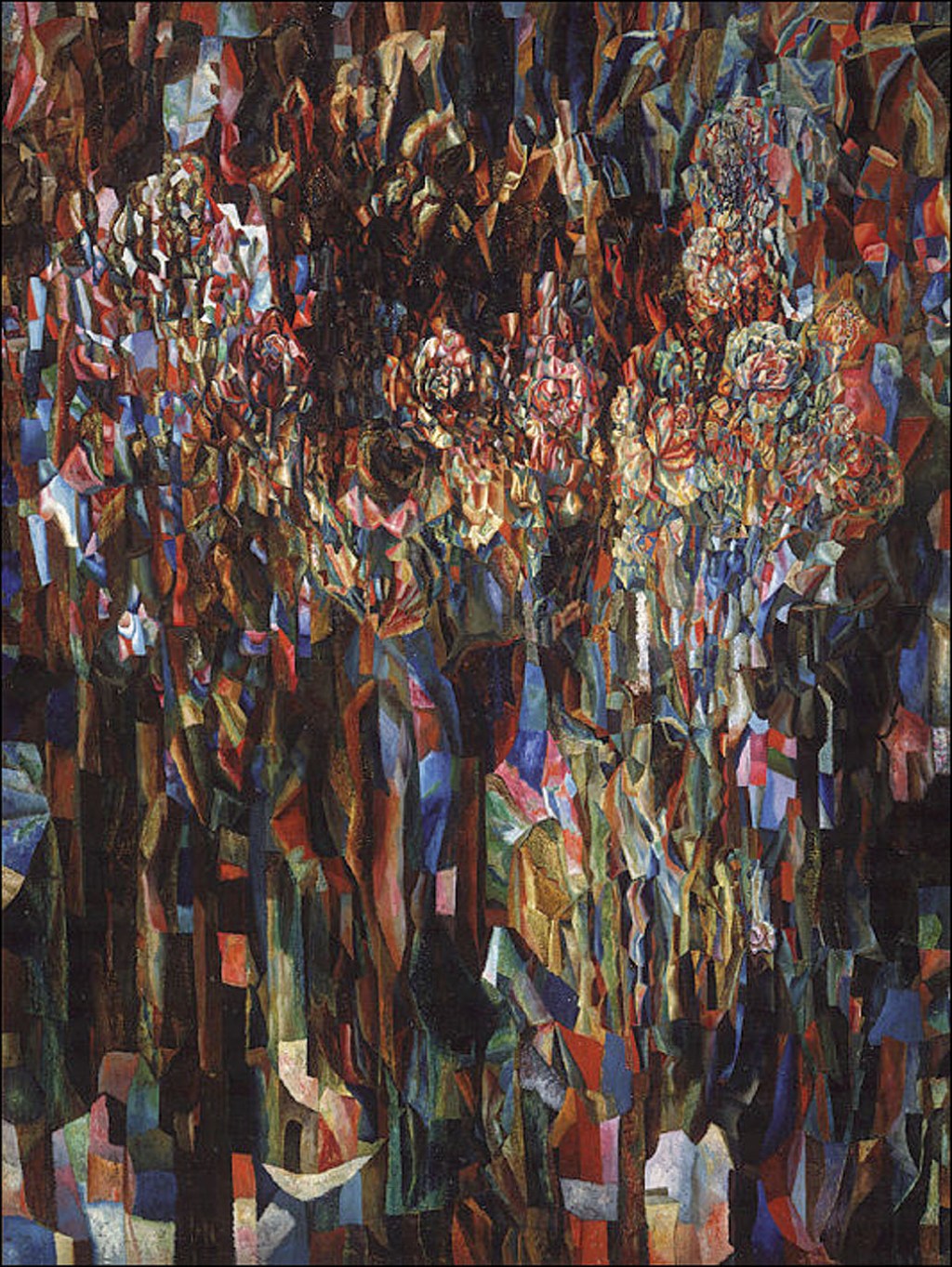
    Image: Dandelions by Isaac Levitain (1889)

  • The Begotten One

    October 11th, 2024

    If you want to be complete, go, sell what you own, and give the money to the poor. Then you will have treasure in heaven. And come follow me. – Jesus, Matthew 19.21 (CEB)

    The pipes are frozen and the shelters are full as we gather in a squat to help deliver God into the world. We wait, we work, midwives of eternity beckoning crying hope into the midst of poverty. Swaddled in donated blankets, the child God first breathes the warmth of love in the frost of Empire. Seraphim sing hallelujah, proclaiming the reign of the poor and suffering, heralding the fall of Caesar. Joy to the world.


    Queerness is the creativity of God. God as pure immanence; so close to the body as to become transcendent. Matter as spirit and spirit as matter. We are a world and in the world, the imagination of the universe creating and re-creating itself again-and-again, learning to find joy in its self-creation. We are a body, a body in loving-becoming, re-membering through holding one another, in our blossoming and sunlight and retreating and moonlight. Queerness is a you-and-I, a we in difference, not one by sameness but one by love, a compassion that takes all into-itself as an unfolding of infinity.


    Beloved child of God, cosmic creation incarnate in powerlessness, the ember of faith faintly burning like a wood stove. She was born a carpenter’s daughter, her hands calloused and dirty, caked with soil and wet with rain. Hoped-for sibling of humanity, she kneels in the mud of the creekbed and enfleshes herself in weakness. Holy kid of the occupied slums, she throws mercy against power and compassion against war. She threads a whip of cords and strikes against the alien beast, the idol being birthed from Caesar’s occupation: quantity. “Give everything to the poor and follow me.”


    Queer love breathes at the edge of the possible. Sophia (incarnate knowing, creative relationship in energeia) is enfleshed in infinite mossy worlds. The owl hoots eternity into the divine beauty of queer longing beyond the beyond of the present. Being becomes becoming in the halo of eros, a fragment of the good-in-itself becoming the breath of persons in intertwined belonging. The earth is my body and I am the earth. Gaia is trans, a Sophia of free forests. In all queer folk I see the breath of God; and in our queerness we create a new heaven. Queer love whispers the promise of the impossible.


    Future ancestor of justice, love-loving-love becoming creaturely in a conspiracy of friends. Sister-spirits uproot division and serve peace, turning their back on ambition, outmatching hate with recognition. “Turn the other cheek” is another way to say, “hit me again, I dare you.” Awaited-for future home, washing feet and welcoming flesh into the eschaton, take and eat, receive and drink. We are one flesh, sharing a meal together; we are one spirit, drinking wine together. This dinner we share, the literal body of God. We sojourn rest, clothed in the cosmos, playing tag in the freedom of the kindom.

    The kiki is an ekklesia.

    I’m sorry it’s had to be this hard. But if I hadn’t walked this path, who would I be? At the moment I felt at the center of my life, the dream still braided like sweetgrass in my memory. I remembered Duffy’s challenge. Imagine a world worth living in, a world worth fighting for. I closed my eyes and allowed my hopes to soar. I heard the beatings of wings nearby. I opened my eyes. A young man on a nearby rooftop released his pigeons, like dreams, into the dawn. – Leslie Feinberg, Stone Butch Blues

    Image: Christ of St. John of the Cross by Salvador Dali (1951)

  • Echogia

    September 27th, 2024

    As far as we can discern, the sole purpose of human existence is to kindle a light in the darkness of mere being. Carl Jung, Memories, Dreams, Reflections

    Language is a map of the interior, mirrored me-and-yous that echo out to form landscapes of meaning, intertwined matterings. Communication begins with perichoretic subjectobjects, exterioring the interior by instantiating a world-with-another, the indwelling of being-here, -now, -with-you. Every locution is a world-between, a you-and-I that unfolds into a doing, an illocution that bubbles up the perlocutionary wave, the echoic ocean of meaning-in-motion. The ma is a disco, the space-between that articulates significance in the dance of poetic swaying, here-and-there, here-and-there. Rolling, rolling, here-again. Affect bounces signification, clapping our sense-of-time together, (who whoo, a whoing humming a’humaning).

    Do that thing you say with your thumbs. Y’know the one, knowing. Knowing is en-habiting echopraxy. Praxis ticcing meaning-in-time, echoeros echologos echopathos echogia. Gaia guarantees the ground-of-all-being (she’s here, she’s here). Intention waits in silence. Listen. Breathe. The the, the the, the the. The heart illocutes being. As if there is knowing without feeling. (Facts care deeply about your feelings. Write them a letter sometime.) To mean is to matter-with-another, to matter another, to matter-to, to matter-to-you. I mean. Please, I mean. Meaning sits softly the underbelly of mossygreen theosis, synthesize synesthesis, I promise to you, I Dei.

    “Unsheathe your dagger definitions. Horseness is the whatness of allhorse. Streams of tendency and eons they worship.” (Joyce, Ulysses) I cannot speak that that I mean, I mean I mean in intended-attending. The space-between flutters potentia into recognition; “I see you” is hidden at the start of every definition. Pharoah goosebumps generalissimo Aten, hymnhim that echoes-you (ask who it is that echoes you). Whose past will you appear in? Who are you the future to? Sometimes you are the future of a child you’ve never seen and the past to an ancestor that you will never know. Meaning is the same thing as history, v. to-history. Historing (us). We who history. The common-soul is the great re-membering, come-to-me my darling. I sparrowgently genera, grassgainly the Unique.

    As if there is ever just one.

    Forget the years, forget distinctions. Leap into the boundless and make it your home! Zhuangzi, Discussion on Making All Things Equal

    Image: Fabric Design with Trout Dance for Backhausen by Koloman Moser

  • Womaning

    September 20th, 2024

    Gender is a kind of imitation for which there is no original; in fact, it is a kind of imitation that produces the very notion of the original as an effect and consequence of the imitation itself. – Judith Butler, Imitation & Gender Insubordination

    Prop. 1: I am a woman.

    O glory, the creative nothing. There is nothing at the heart of things; things are the heart. We heartbeat timelives, the solarsystem beckons aiesthesis, lo holyoneholyone. The inner experience of nothing everythings the nothing echoing the everything.

    A woman is a creative nothing. A woman is Unique. Uniquing Uniques womanhood. There is nothing at the center, but everything emerges from it. The hole at the heart of womanhood that is also poetry.

    Prop. 2: I woman.

    Sing, thing-that-I-am. I gleam graceful, my morningflower. Who? Enter-here, there-again. My faerie faith, the land. I woman place, my placeless womanhood, that worlding that guilds our narration. We mythology woman, I repeat and transform. Echomeaning meaningsecho.

    There is no woman; there is womaning. To woman is to unfold the nothing by creating. It is a gender-ing that lacks the whole, yet is whole, precisely because it is never-ending. Womaning womans a world.

    Prop. 3: I woman as the woman I am.

    We delicate, dove-endowed indexical. I co-doubt the cogito, the extended I I dwell in, perduring. I am here, at one part of my soul, the unfolding of my life. Soulwork, this womaning, orienting-leaning-futuring. Creating-begetting-proceeding. She.

    There is no distinction between One and Many. The One manys the One that I am, the Many I One in manying. I repeat certain pasts and transform certain futures. Intending-attending-meaning. I signify woman in womaning, to me as the interior dwelling, to the world in my expressing.

    The philosophers have only interpreted the world, in various ways. The point, however, is to change it. – Karl Marx, Theses on Feuerbach

    Image: Heart by [ a y s h ] (2022)

  • Everything-Together, or What Do I Believe?

    September 19th, 2024

    God’s kingdom isn’t coming with signs that are easily noticed. Nor will people say, ‘Look, here it is!’ or ‘There it is!’ Don’t you see? God’s kingdom is already among you. – The Gospel of Luke 17.20-21 (CEB)

    1. In the beginning was the One.
    2. The One is Unique, itself-in-itself and irreplaceable by any other.
    3. The One is all-things by being no-thing: possibility-in-itself.
    4. The One articulates itself by becoming some-thing, by actualizing possibility.
    5. In this actualizing, the One Uniques, or articulates itself as what-it-is-in-itself, that being everything-together.
    6. This Uniquing of the One manifests the Many, the pluricosmos of Uniques that form the modal geography of the One’s self-becoming.
    7. This Many is also Unique, each articulation of the One being itself-in-itself and irreplaceable by any other, an individual within the geography of possibility-in-itself.
    8. Everything is Unique, both in its identity with the One and difference as part of the Many.
    9. This process of the One-Uniquing-as-Many can be poetically understood in Trinitarian terms as creating-begetting-proceeding.
    10. Creating-begetting-proceeding is the process of the self-becoming of the One-in-Many and Many-in-One, conjoined in creation.
    11. Creating-begetting-proceeding are co-substantial, always operating together as the same process, but take on different characters in its energeia, or its actualizing in the world.
    12. Creating articulates the creative self-becoming of all-things out of no-thing: some-thing-ing.
    13. Begetting articulates the echoic nature of self-becoming, how this some-thing-ing is echoed, or repeated-and-transformed, in generating the One-in-Many.
    14. Proceeding articulates the historical self-narration of the One-in-Many, through which the One Uniques as the Many and the Many re-members itself as the One.
    15. The union of creating-begetting-proceeding reflects both perichoresis, or the substantial interpenetration of the Many-in-One, and kenosis, or the self-giving of echoic becoming whereby the One empties-itself as the Many and the Many empties-itself as the One.
    16. All Uniques reflect the self-becoming of the One-in-Many by being co-substantial with this self-becoming, even while remaining Unique.
    17. All Uniques therefore reflect the process of creating-begetting-proceeding and of perichoretic kenosis.
    18. Uniques create, they bring-out-of-nothing the some-thing that they are.
    19. Uniques beget, they echo in their becoming, repeating what came before and transforming it, actualizing possibility.
    20. Uniques proceed, they self-narrate their difference as the Unique-that-they-are and in their identity with togethers, or the intertwined Uniquing of multiple Uniques.
    21. Uniques are perichoretic in that their Uniquing overlaps with the Uniquing of others, such that each Unique is itself a together, the identity of difference.
    22. Uniques are kenotic in that they Unique through being gifted their Uniquing by others and they gift that same Uniquing to others, each perichoretically self-emptying in togethering, literal self-giving.
    23. The process of Uniquing, whereby the Unique becomes the Unique-that-it-is, is also one of unfolding, creatively echoing the totality of one’s life, the origami of the soul.
    24. The soul is the life of the Unique understood in this totality, the fully-unfolded being of the Unique.
    25. The good of each Unique is the unfolding of the soul in eudaimonia, a joy that carries across a life: the good life.
    26. This Uniquing is always a Uniquing-with-others, intertwining in different togethers, which unfold as the together-that-they-are, as Unique as the Uniques that compose them.
    27. Togethering is the path to eudaimonia, a re-membering that unfolds the Many-in-One in its totality, an unveiling of the common-soul.
    28. In seeking the eudaimonia of the common-soul, we commit ourselves to the good of others, forming an ethical subjectivity by which our unfolding is oriented toward the good of the Unique togethers that compose our life.
    29. We unveil the good of each together in a way appropriate to it as the together-that-it-is, togethering as friends, as neighbors, as family, as lovers, and as part of a constellation of other togethers.
    30. At the heart of this togethering are those marked by love, a special way of togethering that attends to someone’s unfolding in a way that is free and homely, without possession or direction, and which aims only at the joy of their unfolding as the Unique-that-they-are; that is: love is attending to the unfolding of another.
    31. In unfolding, we matter, co-constituting the world as both that which matters-in-itself (the good-in-itself of the Unique) and that which matters-the-world (the good-of-the-world that is gifted by the Unique).
    32. In togethering, our matterings intertwine with those of others, gifting the good-of-the-world in a way that overlaps, requiring attention to the multiple matterings that co-constitute the good of the together.
    33. Love involves the intimate intertwining of Unique matterings, the souls of the beloveds overlapping as one entity – the doma – reflecting the perichoretic kenosis of the Many-in-One in creating-begetting-proceeding, or love-loving-love.
    34. Entering into the doma requires a mutual powerlessness marked by faith and charity; that is, it requires relinquishing one’s power-over-being to be-with-another, having faith in their free unfolding and charity in humbly emptying-oneself of possession.
    35. The doma is the hearth of the good, wherein children are born and parents lovingly-commit themselves both to their eudaimonia and to the self-consciousness needed to freely and creatively unfold as the Unique-that-they-are and to constitute their own ethical subjectivity.
    36. The love of the doma carries out into the whole world, love-loving-love acting as the model for other forms of ethical subjectivity, so that Uniques in their many togetherings may unveil the eudaimonia of the common-soul.
    37. Each of these togetherings echo the doma in requiring commitment and mutual powerlessness, orienting one’s activity towards the good of another and humbling oneself in faith and charity to empty oneself of possession.
    38. It is the practice of unfolding our commitments in mutual powerlessness that we call virtue, with the character (or patterning) of each virtue being dependent on the nature of the unfolding that it emerges from.
    39. One en-habits/inhabits this virtue through Sophia, or loving-wisdom, a commitment to embodying the Unique virtue(s) of the many Unique togethers of one’s life, orienting oneself to the good of each, and by extension, to the eudaimonia of the common-soul.
    40. Philosophy is the practice of loving-wisdom, learning to orient one’s intentions to the good of others and to the togethers that we compose, to attend to this good in our activity, and to unveil the conjoined mattering of all: being-as-meaning, or the joy of the common-soul.
    And dost thou seek to find the one in two?
    Only upon the old can build the new;
    The symbol which you seek is found in you.
    - Margaret Fuller, The One in All

    Image: Wildflowers by Odilon Redon (1906)

←Previous Page
1 … 5 6 7 8 9 … 16
Next Page→

Blog at WordPress.com.

  • Subscribe Subscribed
    • Fish In the Afternoon
    • Already have a WordPress.com account? Log in now.
    • Fish In the Afternoon
    • Subscribe Subscribed
    • Sign up
    • Log in
    • Report this content
    • View site in Reader
    • Manage subscriptions
    • Collapse this bar