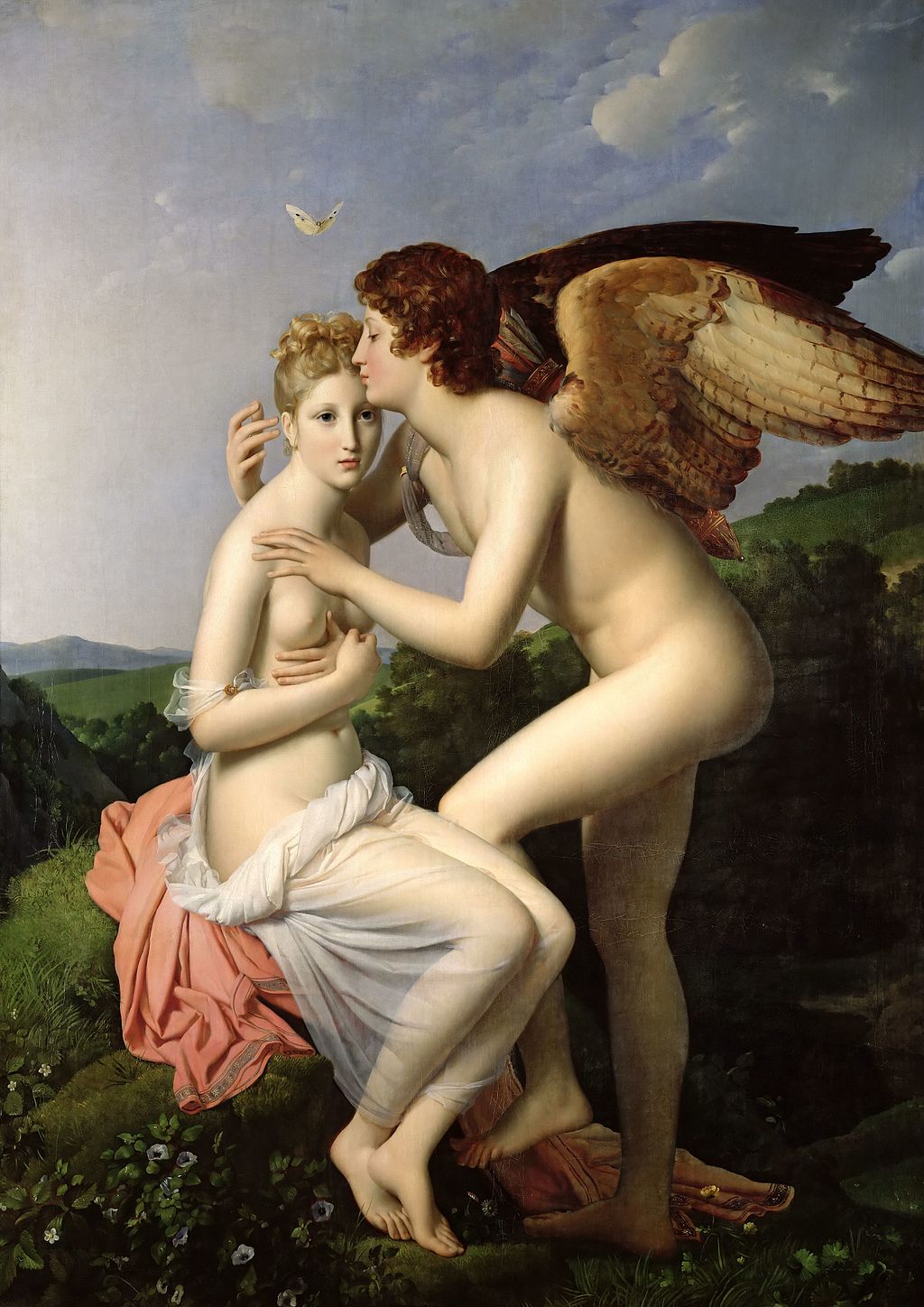
…in the case where we are speaking of human beings, it is said to be necessary to know them before we love them… but the saints, on the contrary, when they speak of divine things, say that we must love them before we know them, and that we enter into truth only by charity; they have made of this one of their most useful maxims. – Blaise Pascal, Pensees
For Katie.
Adapted from a paper for a Heidegger course.
Katie and I met after a tornado. Or, rather, seven tornadoes. Growing up in the Arkansas River Valley, I was used to tornadoes, going up to Papaw’s to huddle in the shelter and peek out at the cyclones. Rogers, however, up in them hills rather than down in the hollers, used to be relatively safe, tornadoes forming more and more as the world warms. This time, seven cyclones ripped through the town, my friends and I hiding under blankets and holding our pets while the electric lines spewed sparks and the winds uprooted oaks. Unbeknownst to me, Katie was at her parents’ place a few miles away, sheltering with four dogs and a cat. Displaced by the tornado, we’d go on our first date a week later. Who Katie was I didn’t yet know, but loving and knowing are both rooted in mystery. To begin to fall in love is to say, “I do not know you, but I want to,” to attend to their unfolding as the Unique that they are, an unspoken but never-silent intention.
Does love come from knowing, or does knowing come from love? One knows by charity, an act of loving-faith that invites the other to reveal themselves. Loving-faith wills the free unfolding of the other without possession or direction; it is a leap of faith into the world of the beloved. In love, we attend to the unfolding of the beloved, nurturing and inviting their Uniquing without possession or direction. Love wills freedom; freedom apocalypts joy. Joy in the unfolding of another opens the space of possibility, mattering new worlds into presence. Only by love can one know, as only by love can one unfold freely, the doma receiving the Uniquing of the together and gifting the Uniquing of each.
The activity of love reflects the activity of all: perichoretic kenosis. Perichoresis refers to the indwelling, or interpenetration, of the persons of the Christian Trinity and the divine and human natures of the Begotten One. The being of each is not separate but co-essential, dwelling-together in the hypostatic union. Though the activity of the Trinity personalizes itself as Creating, Begetting, and Proceeding, the essence of the Trinity is One, such that each person acts essentially, but freely, in concert with the others. The unfolding of each person is thus also the unfolding of the being of all, with this unfolding manifesting both as the internal life of the Trinity and its external energeia, or activity-in-the-world. The energeia reflects the essence of the Trinity in the union of its internal life, the divine doma, and in the intertwined becoming of each person in their personhood. Perichoresis is intimately connected with kenosis, the self-emptying of the Trinity in creation and incarnation. Kenosis is the voluntary humbling of God in becoming-human and in creating that which lies outside of herself. This kenosis is part of the energeia, in which the essence of the Trinity acts-in-the-world, so that the internal life of the Trinity is also emptied and made powerless in creation and incarnation. It is this self-emptying in both the activity and essence of the Trinity that unites the divine and human life in the Begotten One.
Katie collects Depression Glass, especially pink glass. Though the differences between original Depression Glass and reproductions made in the 1980’s are subtle, she can spot them, pointing out when seams are machine-made rather than hand-made and noting how manufacturing processes for glass differ between decades. She hates it when men casually think they know her hobby, incorrectly lecturing her about radiation (men love to think they understand invisible dangers). She loves pink both because it’s pretty and because it obscures and amplifies. To queerly-perform femininity can be an act of subversion when directed against power and towards liberation, part of the “trickster” nature of lesbian femme identity. I am also a trickster – a transfem butch, a strange apparition of queerly embodied womanhood. The essential nature of our relationship remains hidden from much of the world yet is always unfolding-within. She’s the first person whose witnessing me as a woman feels automatic and primordial, whose queering of womanhood already includes me. Everyone underestimates the woman in both of us and are mistaken by our worldly performance. The power of trickster genders is in concealing from power a hidden utopia, a space-of-openness. Our presentation tricks patriarchs, whose gender perception remains stunted, suspicious but not knowing why. But in dwelling in our co-becoming, we are able to manifest the depths of who we are, to act as our own queer utopias.
In attending to the unfolding of another, we will their freedom, and this willing is kenotic insofar as it (a) empties the self through powerlessness, and (b) opens itself to, and delights in, the unfolding of the beloved. Our powerlessness in love is a foregoing of possession and direction, emptying oneself of expectations for, and claims on, the being of the beloved, instead acting as a home for their free unfolding. In the poetry of Christian kenosis, the Begotten One empties herself of Godhood and takes on the free and unconstrained essence of being human, delighting in the being of creation rather than in God’s power-over-being. Likewise, in taking joy in the unfolding of the beloved, we empty ourselves of our power-over-being and instead welcome their free Uniquing. In acting as a home for their Uniquing, we act perichoretically, co-dwelling in our being-in-the-world as the doma, allowing their unfolding to interpenetrate with ours, accepting and appropriating our being-with-another as part of our being-in-the-world.
This perichoretic and kenotic form of love must be mutual. One loves not only by loving another but by loving-with-another. Love is not self-sacrifice, negating oneself in favor of the other, being only a prop for their unfolding. That is not love but being-possessed – having one’s being possessed. Instead, in love, one’s attending to the unfolding of the beloved is met by their attending to your own unfolding, the beloved of the beloved. Lovers joy with one another in their free unfolding, co-constituting the doma as a site of common love that is also a common project of openness, a site of possibility that is radically open to the unfolding of lovers. This being-at-home is a being-with-another where the unfolding of each is made free and gentle, where the past-and-future of the world is met and journeyed together. Being-at-home is unfolding together in a common-world. Falling-in-love is entering into that being-at-home-with-another and requires faith and charity through giving up one’s power and becoming open to another’s free unfolding. In theological terms, being-at-home requires kenotically emptying-oneself of power and possession, but in doing so one enters perichoretically into a commonly unfolding being, a being-with-another that allows for the free and homely unfolding of each. Like how the persons of the Trinity are united in essence but remain distinct persons, those in love at-home with one another are united in their unfolding but remain distinct, neither directing nor controlling the unfolding of the other.
Katie got a new house recently. I knew she would; she knew she knew she would but knowing she knows wasn’t comforting. There’s not much in the way of housing protections in Arkansas (not much in the way of protections in general), but she’s resourceful. She built her own business while in poverty and learned all the required upkeep herself. Changing a tire? Yes. Electrical work? Yep. Knowing how to haul a giant metal trailer and upkeep it every day? Absolutely. Doing this, all while performing the femininity that rich WASPs expect? Of course – performing gender is also performing gender in-a-world, thrown into a landscape of norms that one must navigate, concealing and revealing through one’s guises. I’ve generally used masculine presentation as a survival technique – men turn violent when faced with trans womanhood, and especially with trans womanhood divorced from cis-femininity, but they’re also very bad at spotting it. Similarly, she both experiences and navigates oppression in the context of her feminine presentation, our expressions being both genuine incarnations of our unfolding gender-life while also concealing a much more complex interior. I’m helping her move this weekend, and in taking-apart her old home to build a new one, I notice the ways she reflects that interior life in the world around her – her grandmother’s lamp, her Depression glass, her dried flowers, the different cups and plates and stuffed animals and pictures and writings that she’s kept from loved ones, both here and departed. Taking joy in her unfolding is also witnessing the dialectic of her performance – both how she takes up guises again-and-again to be-in-the-world and how she architects her own space to reveal herself, to communicate how she finds herself. I find myself in love with her and so find myself always encountering her own finding, her own attunements, her own loves and joys, again and again in the unfolding.
Freedom is being-at-home in one’s unfolding, being-held in the faith of another. Joy emerges from freedom through the eudaimonia of Uniquing, the good-of-the-Unique that is also the good-itself. This joy is a mattering, one’s own freedom appearing as significant, as the mattering of the beloved emanates out into the mattering of all, intertwining Uniques togethering in their common-world, the joy of the doma. The reciprocity of love allows for the Unique of each to be willed, for the doma to become a dwelling of the freely unfolding being of beloved and beloved, inaugurating a new everydayness populated by the good of each Unique. One does not love a secret internal nature, the esse of the beloved, but instead their unfolding life, their being-in-the-world and the multiplicity of forms that their being takes, linked together in their Uniquing. Openness to the unfolding of the beloved is an openness to their essential fluidity, the creative self-becoming of the Unique.
In being-at-home with one another, lovers find-themselves in a common pursuit, the project of the doma. “I love you” discloses one as finding-oneself falling-in-love, an affirmation of this common pursuit. If love marks a mutual openness to the unfolding of the beloved, then being-in-love is taking up the project of being a home for the unfolding of those you love. Being-in-love invites the other into being-at-home with oneself, and in this invitation and common pursuit, lovers are disclosed as always-and-already unfolding together, the togethering of intertwined Uniques. Likewise, the world is disclosed as co-constituted by the project of the doma, populated with matterings that receive-and-gift the unfolding of each Unique in their togethering. Lovers discover the world as not only mattering-to-them, but mattering-to-another, mattering-to-her. The home of being-at-home is a world of matterings shared by those in love. Pursuing this common project, lovers are invited to unfold as they are, just as they welcome the unfolding of their beloved, each freely enacting their being through their common project. One never loves through self-sacrifice, because to attend to the unfolding of the beloved is also to receive their love, to attend-with-them.
In being-at-home with another, the world is populated by love, love dwelling in our matterings. Freedom is revealed in joy and the world is transformed into a reflection of the doma. In finding-oneself in love, one encounters a world that affords paths through that love, where the telos of our conjoined activity is the unfolding of lovers in their free Uniquing. The final end of the Uniquing of each thereby becomes the perichoretic kenosis of lovers being-at-home, a charitable and faithful love by which one comes to know both oneself and the beloved. To love is to attend to the unfolding of another, and one can only attend through openness, through a faith that empties oneself in powerlessness and is open to the free becoming of the beloved. To love is to wander possibility hand-in-hand.
I have to leave again at the end of July. One of the troubles of being-at-home is that you’re not always there, even if they’re always with-you, present in their absence. Being-at-home implies being-away-from-home. Yesterday, I helped her move into her new place, and we’re slowly setting it up, architecting a new physical home even as we continue to architect an en-spirited one. Putting everything away and back again, I re-encounter Katie over-and-over, her beloved things acting as scaffolding for my memory. This is hers and she feels this way about it; that is hers and she got it when this occurred. But more than that, in doing this with-her, I encounter her in her infinite freedom, the fact that who she is in herself is not captured by the world she has formed, even as that world reflects her unfolding. The depths of her disclosure, of how she has communicated her finding, is still only the shallows, waves of being echoing an uncharted, ever-moving ocean. Love is knowing I’ll never know everything, but also knowing that knowing is still only secondary to love – I love faithfully, dwelling in the mystery of the beloved. I started writing this paper because I knew I would be leaving at the end of the summer, and I knew that I wanted to continue loving Katie, to continue knowing her, even apart. But that kind of intentional knowing, of encountering mystery again-and-again, requires intention, contemplation, attention. My intention, my hope, my life goal is being-at-home by being-with-Katie. To start that journey is to say again and again each morning, “I do not know you, but I want to.” Two Uniques Uniquing together in the cornucopia of being.
One does not enter into truth except through charity. – St. Augustine, Reply to Faustus the Manichean
 Fish In the Afternoon