"My life has been the poem I would have writ,Henry David Thoreau, A Week on the Concord & Merrimack Rivers
But I could not both live and utter it."
How do you attend to your body? Do you? Do you attend-to-you or attend-to-others? Neither? Both?
Attention is orientation, directedness. Attention and intention are paired, one intends to attend and attends to intend. I attend to you to show my intention. I intend to show you my attention. Where does my body lean? How is it directed? This word “orientation” clangs a bit too much, it hits artificial, that confusing terminology “sexual orientation.” Am I straight? Am I gay? If I don’t know what body I’m in, how do I know what bodies I’m drawn to? Or does a ghost want? Am I longing or haunting, longed-for or haunted-by?
Gender is reproduced through movement. Gender orients us, directs us, moves us to attend and intend in certain ways. Patriarchy is an onto-violence, the imposition of a world onto possibility, the Leviathanic pretension of necessity. The Patriarch directs our attention to gender roles, patterns of gendered movement within Leviathan. Even when we desire we are forced to desire the Leviathan, to see in others the traits that reproduce it. Dating becomes a market, love becomes exchange. Lovers become units of comparison, markers on a ledger fucking in virtuality, leveraging the machine against the real.But the Woman-King wanders. The Leviathan cannot contain its excess. Gender is reproduced through movement; it can be changed.
First, we attend to the body. What do you feel when you hum? mmmm. Hear your bones echo like a cave. Where is your pain? Where is your pleasure? Your body is a landscape; what are the features you wish to travel? We wander ourselves and encounter the becoming of the matter we are, matter mattering matter. Feel the texture of gravity as it tosses-you to-and-fro, moving-stillness, the ever-wobbling. How do you want to move? What do you want to be? Where does your body lean?
Then, we attend to the world. How do you want to move your hands? Your mouth? Your feet? Your hips? How do you want to animate? What motioning are you drawn-towards, where do you encounter your own becoming? Transitioning is doing; even to remain or to refuse is an action. All doing is a patterning, an echoing – repetition and transformation. What do you want to repeat? How do you want to transform? In being oriented, being-directed, where do you want to go?
What is it to attend to the Unique? How do I move when I echo-myself, to en-flesh the I that I intend? What histories do I repeat and what futures do I move-towards in my transforming? The Gemeinwesen is across-time and without-time, the many-pasts and many-futures of human beings in mutual shaping, the form-of-life of the human Unique. As the Unique in the Unique, we disclose these many-pasts and intend these many-futures, forming new rhythms of unfolding, en-forming-the-form-of-life. In en-fleshing the gender that I am, I repeat certain histories and attend to my transforming with certain futures in my intending. There are infinite patterns in the Unique’s unfolding, the is-that-is, the irreplaceable; every unfolding of every Unique is connected to every other but remains the-is-that-it-is.
The Unique Uniques and what the Unique Uniques is poetry.
“For women, then, poetry is not a luxury. It is a vital necessity of our existence. It forms the quality of the light within which we predicate our hopes and dreams toward survival and change, first made into language, then into idea, then into more tangible action. Poetry is the way we help give name to the nameless so it can be thought. The farthest external horizons of our hopes and fears are cobbled by our poems, carved from the rock experiences of our daily lives.”
Audre Lorde, Poetry Is Not a Luxury
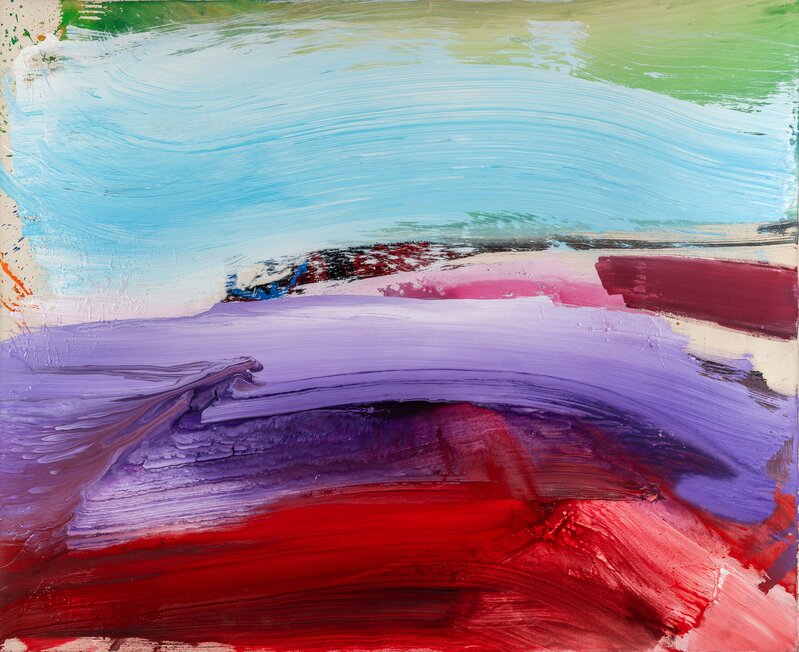
Image: Creation by Ed Clark (2006)
 Fish In the Afternoon